
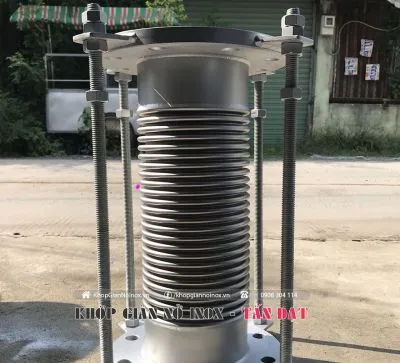
Learn in detail about expansion joints, an indispensable equipment in industrial pipeline systems that helps absorb vibration, compensate for thermal expansion, and increase the durability of works.
Expansion joints play an important and indispensable role in industrial zones, factories, and modern construction projects to enhance the stability of entire piping systems. During operation, fluid pipelines are frequently subjected to high temperatures and heavy pressure, leading to deformation or mechanical stress. The presence of this equipment thoroughly resolves the above issues, safeguarding system safety and minimizing repair costs.
In the scope of this article, CÔNG TY TNHH SX TM VÀ DỊCH VỤ CƠ KHÍ TẤN ĐẠT will join our customers in exploring deeper into the concept, popular types, advantages, and practical applications of this expansion equipment across various industries.
What is an expansion joint and its basic structure
Expansion joints (also known as expansion joints) are technical devices installed directly on piping systems to increase overall system stability through two main functions: absorbing vibration and compensating for the thermal expansion of pipelines.
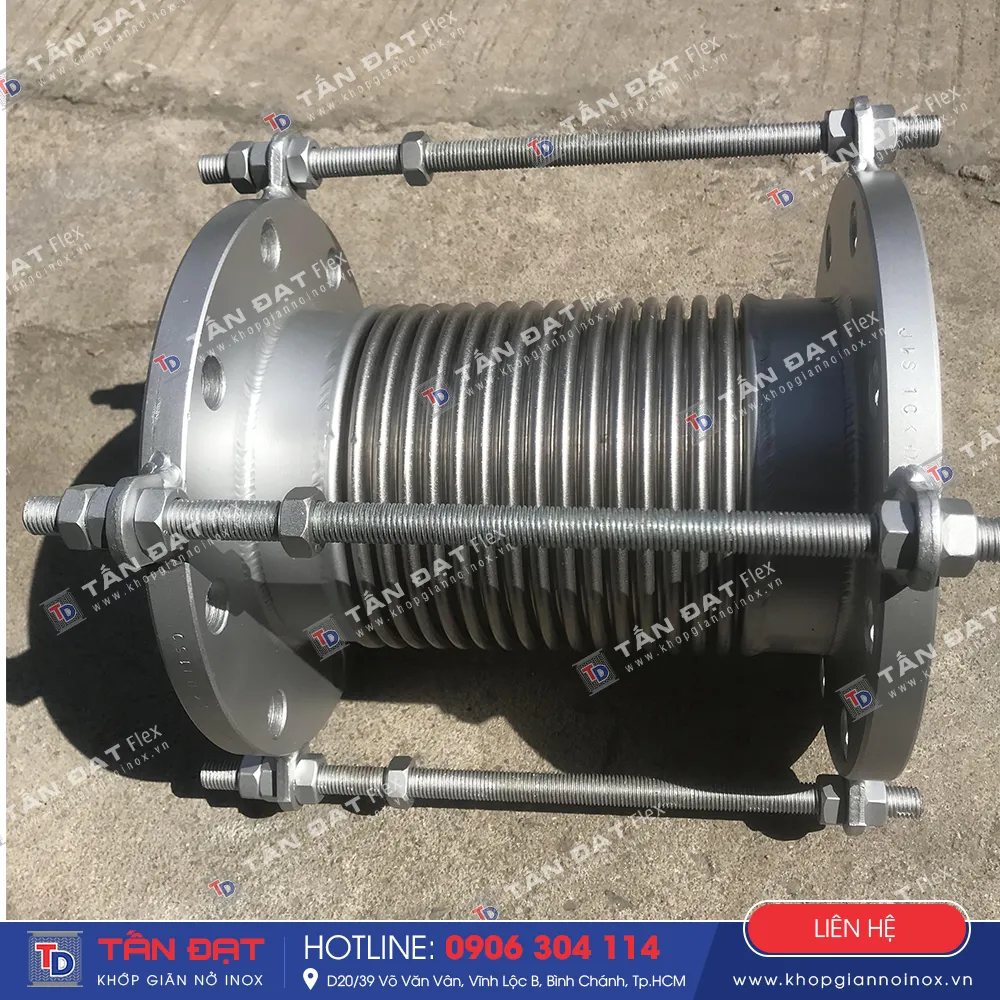
The core component of this equipment is the bellows, usually made from durable metals such as steel or stainless steel. Thanks to its flexible corrugated structure, the bellows allows the device to undergo elastic expansion along the axial direction or withstand certain angular misalignments. The use of quality metal materials helps the product achieve high durability and low maintenance costs throughout operation.
Classification of popular expansion joint lines
Depending on operating conditions, media, and the specific characteristics of each project, engineers can choose from various types of expansion joints:
- Stainless steel thermal expansion joints: Specialized for high-temperature systems, offering good corrosion resistance against certain common chemicals.
- Fabric heat-resistant expansion joints: Commonly applied to high-temperature air ducts, flue gas, and ventilation pipes.
- Compensators with inner sleeve: Specialized design to compensate for displacement, equipped with an inner guide sleeve to stabilize flow.
- Industrial steam expansion joints: Meets the severe pressure and temperature requirements of boilers and hot water networks.
- Flanged thermal expansion joints: Convenient for disassembly and periodic maintenance on pipelines.
- Square expansion joints: Square cross-sectional design, suitable for factory ventilation systems and chimneys.
- Welded-end expansion joints: Suitable for fixed connections requiring high tightness through direct welding.
- Generator expansion joints: Thoroughly absorbs strong vibrations from power generator engines transmitted to the exhaust pipe.
- Flanged rubber expansion joints: Helps effectively dampen and resist vibration for water supply and drainage pump systems.
- Stainless steel expansion joints with guiding tie rods: Helps limit the expansion stroke, preventing overloading of the bellows.
- Expansion joints with protective outer cover: Enhances the outer armor layer to protect the bellows from mechanical impacts from the environment.
Advantages of using expansion joints in industry
Equipping expansion joints brings practical benefits to piping systems and structural works:
- Thermal expansion compensation: Prevents thermal stress that causes warping, cracking, and breaking of pipelines and structural supports.
- Vibration reduction: Eliminates vibration from rotating equipment (such as pumps, air compressors, generators) transmitted along the pipeline.
- Settlement and misalignment compensation: Supports foundation settlement compensation or positional misalignment at expansion joints of construction works.
- High durability: Thanks to its construction from metal and specialized load-bearing materials, the equipment operates stably with minimal periodic maintenance costs.
Practical applications and distinction from flexible joints
Expansion joints are widely applied in many industrial and infrastructure construction fields:
- Boiler steam lines, hot water networks, thermal oil systems.
- Exhaust gas systems, chimneys of thermal power plants.
- Production lines in cement, steel, paper, and chemical plants.
- Long pipeline routes in industrial zones and generator exhaust systems.
Many people often confuse expansion joints and flexible joints. Basically, expansion joints primarily absorb axial displacement caused by temperature changes; meanwhile, flexible joints usually feature an outer braided mesh, specialized for vibration dampening and offset misalignment. In many large technical systems, these two devices are often combined simultaneously to achieve optimal efficiency.
Contact for consultation and custom fabrication
Customers wishing to learn more about expansion joint models or needing custom-made equipment according to specific project technical parameters, please contact us directly for prompt support:
CÔNG TY TNHH SX TM VÀ DỊCH VỤ CƠ KHÍ TẤN ĐẠT
- Thương hiệu: Tan Dat Flex
- Hotline: 0906 304 114
- Zalo: 0906304114
- Email: khopgiannoinox.vn@gmail.com
Frequently asked questions
Do expansion joints require maintenance?
How often should expansion joints be replaced?
Related articles
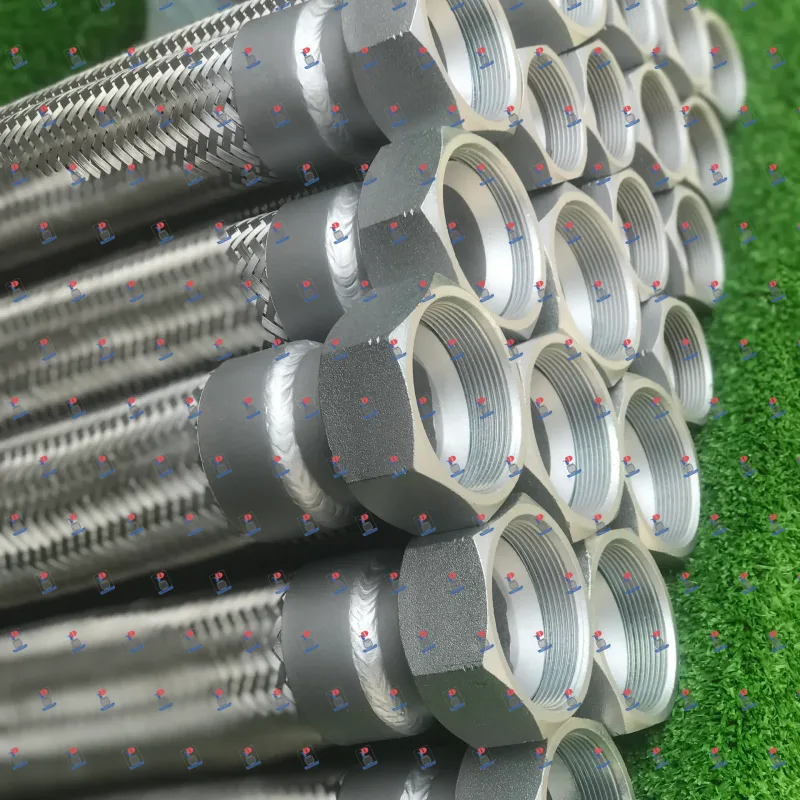
304 stainless steel braided corrugated hose with iron threaded ends
Discover the features and applications of 304 stainless steel braided corrugated hoses with iron threaded ends. Learn…
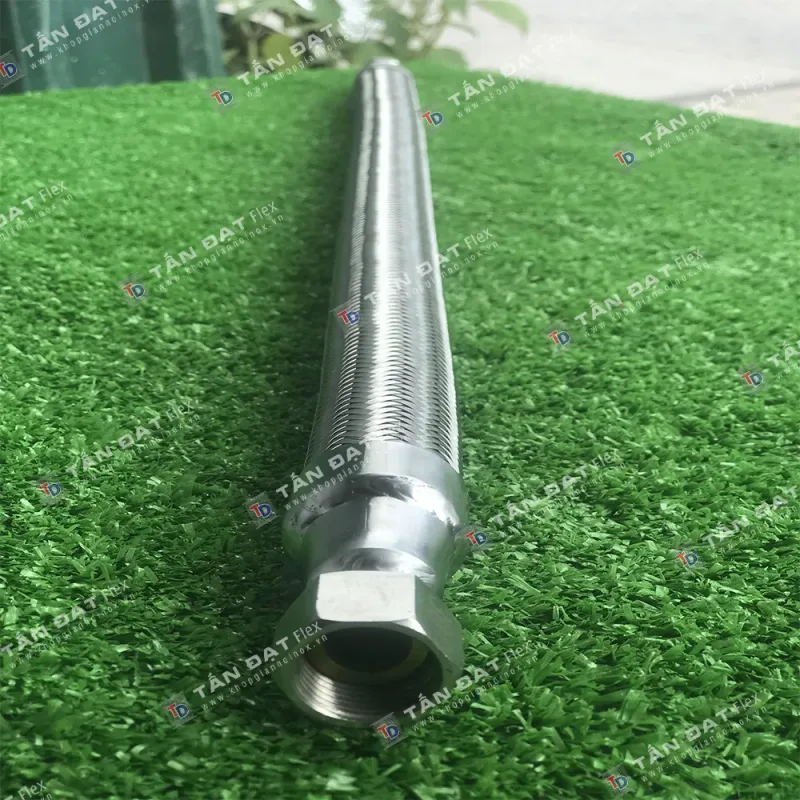
Stainless steel flexible hose with female cone seat thread, flat thread, and union: structure and technical specifications
Learn in detail about the structure, technical specifications, and characteristics of various types of stainless steel…
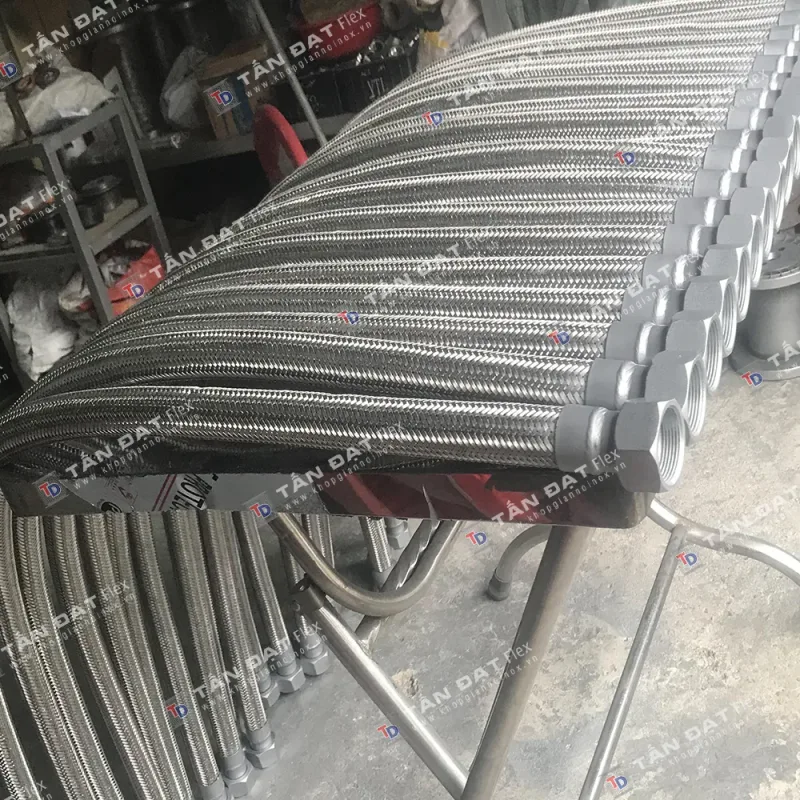
Heat-resistant stainless steel braided hose: construction and uses
Learn in detail about high-temperature braided stainless steel flexible hoses provided by Tan Dat: constructed from…