
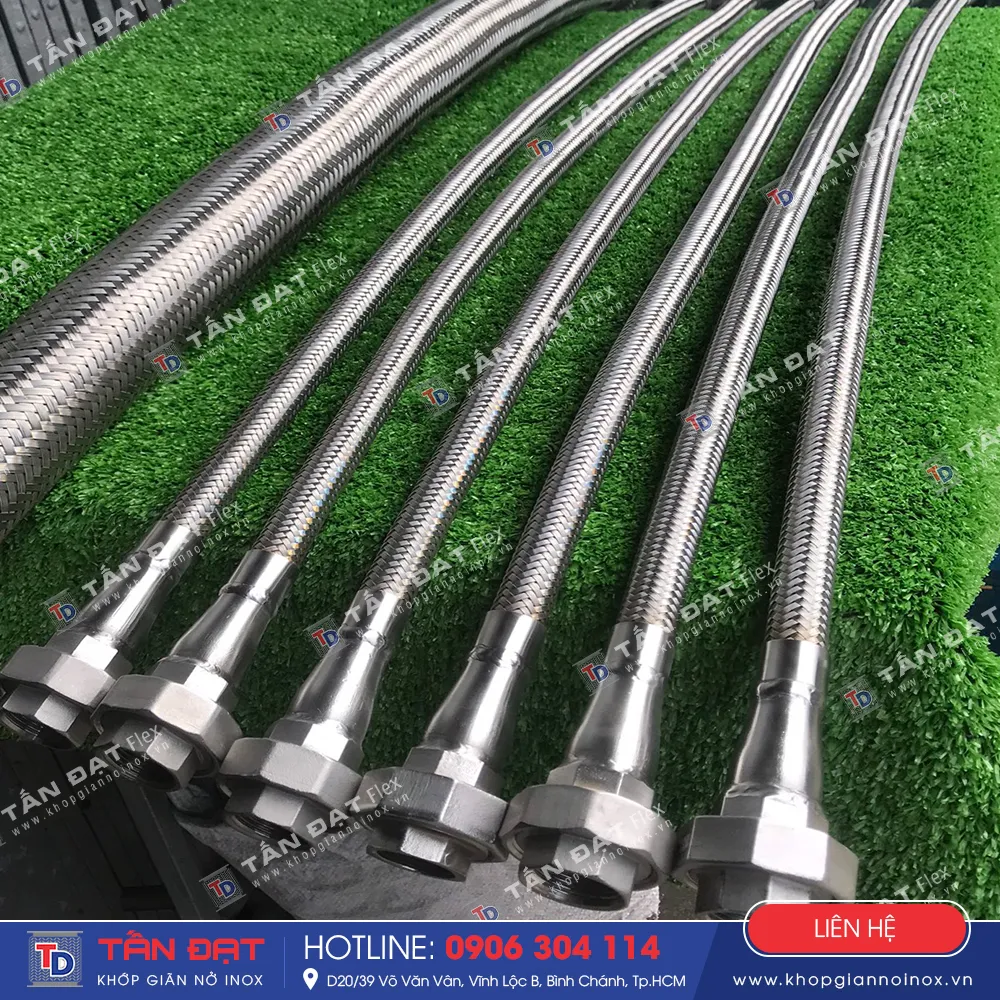
Learn in detail about the stainless steel flexible joint with 2 union ends RC220 manufactured by Tan Dat Mechanical: technical specifications, advantages of union ends, practical applications, and how to choose the right product for piping systems.
Stainless steel union flexible joints (model RC220) are flexible connection solutions for small and medium-sized pipelines: absorbing vibrations, compensating for thermal expansion, and allowing quick disassembly thanks to the union nuts. This product line is manufactured by TAN DAT MECHANICAL PRODUCTION TRADING AND SERVICE COMPANY LIMITED according to order, meeting the exact dimensions and materials required by the project.
Technical specifications of RC220 union flexible joints
To ensure the correct equipment selection for the system, customers can refer to the basic technical specification table of the RC220 product line:
| Characteristics | Detailed specifications |
|---|---|
| Nominal diameter | 6A ÷ 100A (DN6 – DN100) |
| Standard length | 200, 300, 400, 500, 600, 800, 1000 mm (other lengths upon request) |
| Hose body – braid | Stainless steel 304 (stainless steel 316 upon request) |
| End connection material | Malleable cast iron or stainless steel |
| Working conditions | Suitable for common pressure and temperature ranges of water, steam, and gas systems |
Outstanding advantages of the union design
Unlike traditional direct threaded connections, the union end possesses fundamental advantages that help protect the pipeline system:
- Anti-torsion: Allows holding one nut stationary while tightening the other nut with a wrench. Thus, the corrugated hose body is not twisted — the primary cause of premature failure in flexible joints.
- Quick disassembly for maintenance: When maintenance is needed, technicians only need to unscrew the union to remove the joint without having to rotate the entire pipeline run, allowing fast replacement installation without cutting pipes.
- Effective damping: Effectively absorbs vibration forces transmitted from pumps and compressors to the pipeline.
- Thermal expansion compensation: Solves thermal expansion issues and minor misalignments during installation.
- High durability: Stainless steel material helps resist rust, delivering a longer service life compared to standard rubber joint lines.
- Booster pump outlets and hot water supply lines.
- Small-sized air conditioning – chiller systems.
- Compressed air pipelines.
- Equipment pipelines in industrial factories.
- Determine dimensions: Choose thread or union sizes that match the actual pipeline (DN15, DN20, DN25...).
- Choose length: For positions with strong vibrations or significant eccentricity, it is advisable to prioritize joints with lengths greater than standard.
- Choose end connection material: Use malleable cast iron for standard clean water systems; choose stainless steel for environments with high humidity, mild chemicals, or the food industry.
- Provide pressure and temperature: It is necessary to accurately report the working pressure and temperature parameters so the technical team can select the appropriate number of braid layers.
- Brand: Tan Dat Flex
- Hotline/Zalo: 0906 304 114
- Email: khopgiannoinox.vn@gmail.com
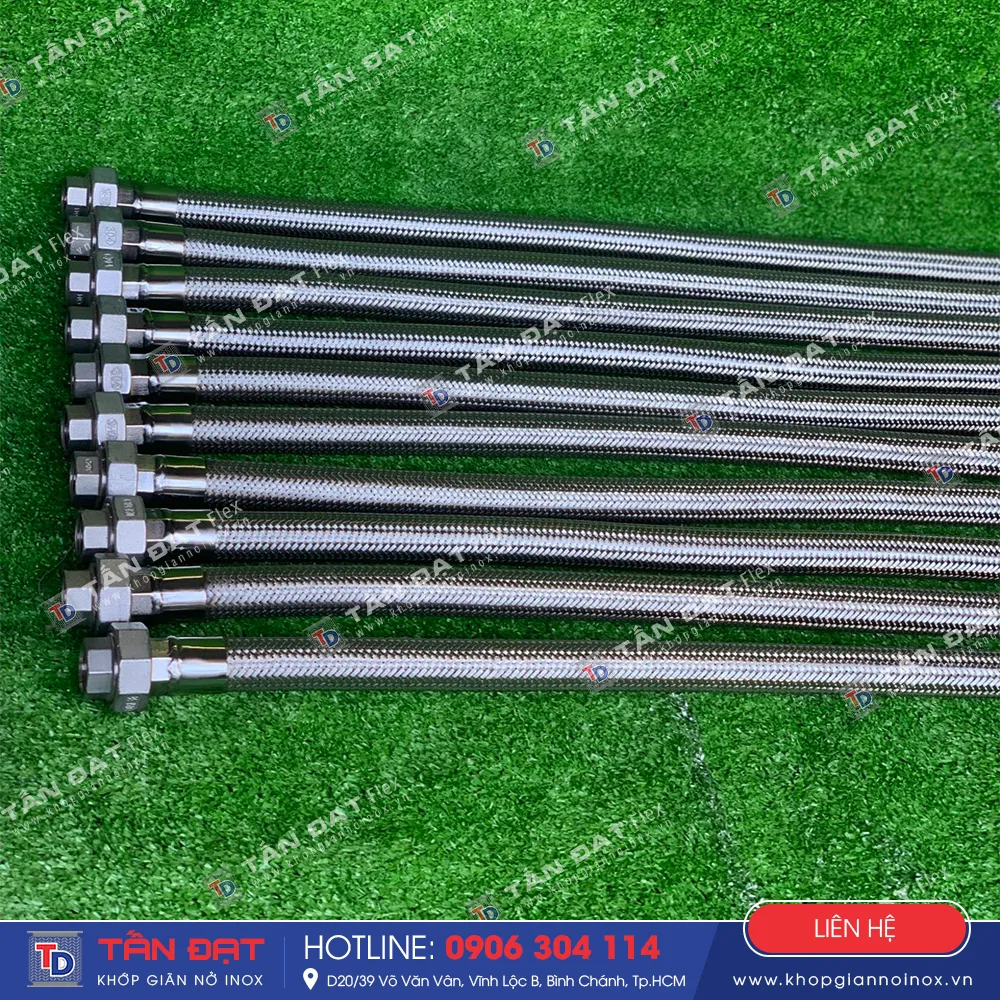
Practical application range
RC220 stainless steel union flexible joints are commonly used for straight installation positions where thermal expansion or vibration occurs in the system:
Note: For pipeline systems larger than DN100, customers should switch to using flanged flexible joints to ensure sturdiness and load-bearing capacity.
Guide to choosing the right union flexible joint
To ensure operating performance and durability for the system, selecting the correct type of flexible joint is extremely important. Below are the criteria to keep in mind:
Contact for custom-made flexible joint fabrication
TAN DAT MECHANICAL fabricates stainless steel flexible joints according to the specific technical requirements of each project, including small-quantity orders. Please contact us directly for detailed consultation:
Frequently asked questions
What is the maximum size available for the 2-union-end flexible joint?
What is the difference between cast iron and stainless steel unions?
Can custom lengths be made outside of standard specifications?
Related articles
316 Stainless Steel Flexible Joints DN100 Flanged: Corrosion Resistant, Easy to Connect
Discover the 316 stainless steel flexible joint DN100 flanged with excellent corrosion resistance and effective…
Engine anti-vibration hose, exhaust flex pipe, stainless steel flexible pipe: structure and applications
Learn in detail about engine anti-vibration hoses, also known as exhaust flex pipes or stainless steel flexible pipes.…
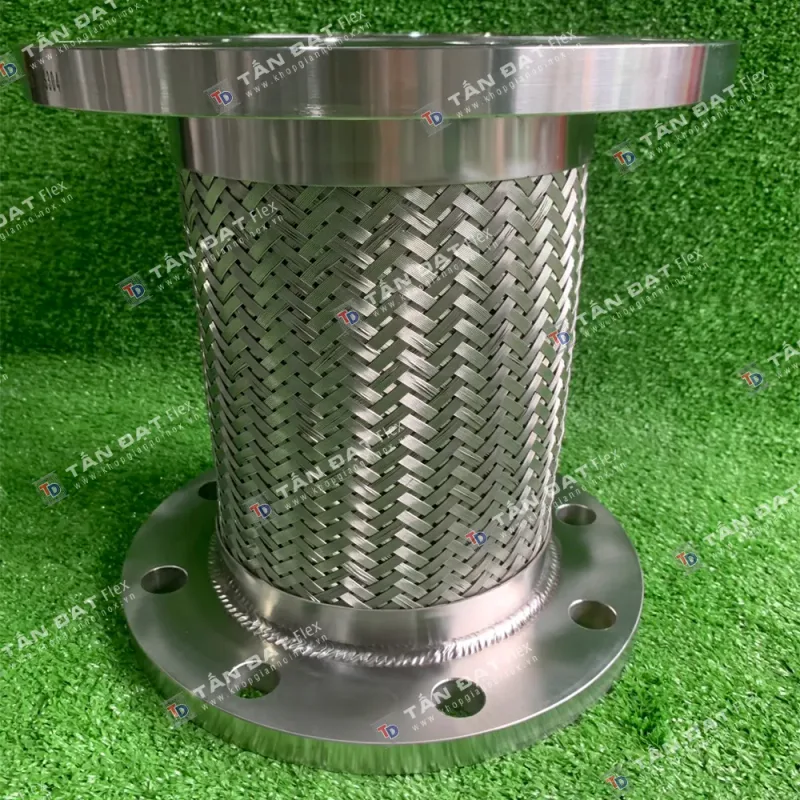
Stainless steel flexible joint DN150 x 300mm with dual JIS 10K flanged ends
Learn in detail about the stainless steel flexible joint DN150, 300mm in length, with dual JIS 10K flanged ends. An…