
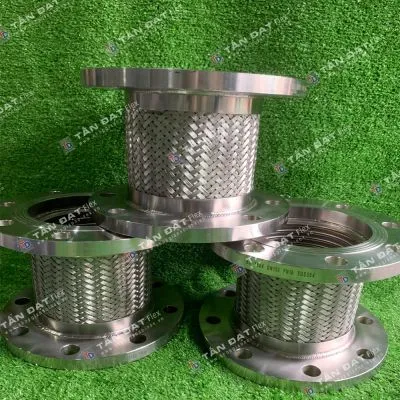
Learn in detail about flexible joints, their vibration-dampening function, common classifications by material and connection types such as threaded and flanged, as well as how to choose the right one for piping systems.
Flexible joints are devices widely used in industrial pipelines, serving as connection points between two pipe sections to ensure stable system operation and effective vibration damping.
Functions of flexible joints in industrial piping systems
In fluid pipeline systems, flexible joints play an essential role with several important technical functions:
- Vibration and noise reduction: Effectively absorbs vibrations and noise transmitted from pumps and compressors to the piping system.
- Misalignment compensation: Compensates for minor center or angular misalignments during actual pipe installation.
- Thermal expansion absorption: Effectively handles length variations caused by temperature expansion of the fluid or structural shifts and subsidence.
- Equipment protection: Minimizes mechanical stress acting on valves, welded joints, flanges, and equipment installed along the pipeline.
Classification of flexible joints by manufacturing material
Depending on the medium conditions, temperature, and working pressure, flexible joints are divided into the following main product lines:
Stainless steel flexible joints (metallic)
The product consists of an inner corrugated stainless steel hose and an outer stainless steel braided layer. This device withstands high temperatures, high pressures, and durability when exposed to various common chemicals. Stainless steel flexible joints are suitable for steam, hot water, oil, gas systems, and fire protection systems (PFP).
Rubber flexible joints
This type offers the advantage of very good vibration and noise reduction with low investment costs. However, the product has limitations in working temperature and may age over time.
Classification by connection type
The selection of the connection type depends on the pipe size and operating pressure of the system:
- Threaded flexible joints: Commonly used for small pipelines ranging from DN15 to DN50, facilitating quick installation. The union variant allows easy disassembly without rotating the pipe section.
- Flanged flexible joints: Commonly used for large-sized pipelines requiring high pressure resistance. The product is manufactured according to common flange standards such as JIS, BS, ANSI, and DIN.
- Sanitary clamp flexible joints: Specialized design for the food and pharmaceutical industries with clean surfaces, easy disassembly, and washing.
How to select flexible joints with technical precision
For the system to operate safely and achieve optimal efficiency, engineers should note the following selection steps:
- Accurately determine the nominal diameter (DN) and connection type of the piping system.
- Evaluate the working pressure, actual temperature, and medium properties to choose the appropriate material (rubber, stainless steel 304, or stainless steel 316).
- Consider the level of vibration and actual eccentricity to select a compatible joint length.
Contact for consultation and custom-made flexible joint fabrication
TAN DAT MECHANICAL PRODUCTION TRADING AND SERVICE COMPANY LIMITED directly manufactures various stainless steel flexible joints according to customers' specific technical requirements. Please contact:
Tan Dat Flex
Hotline / Zalo: 0906 304 114
Email: khopgiannoinox.vn@gmail.com
Frequently asked questions
Are stainless steel or rubber flexible joints better?
Where are flexible joints installed on a pump system?
Related articles
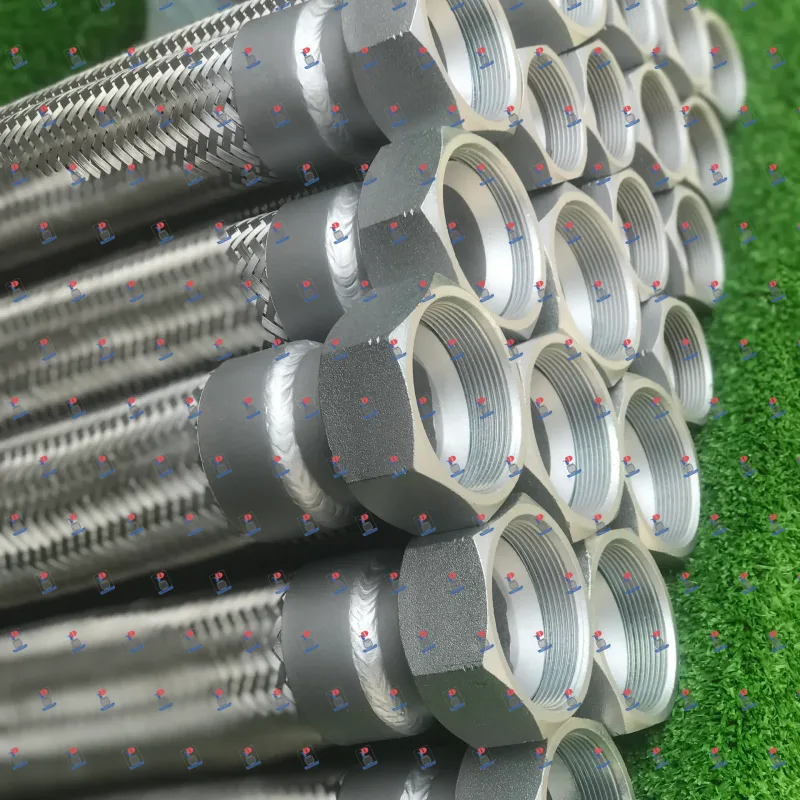
304 stainless steel braided corrugated hose with iron threaded ends
Discover the features and applications of 304 stainless steel braided corrugated hoses with iron threaded ends. Learn…
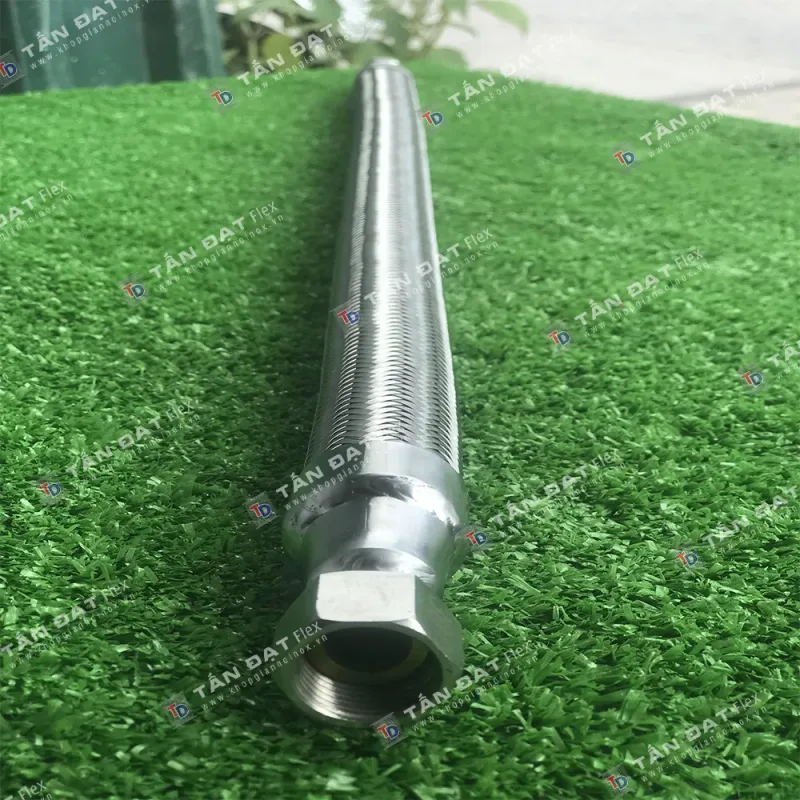
Stainless steel flexible hose with female cone seat thread, flat thread, and union: structure and technical specifications
Learn in detail about the structure, technical specifications, and characteristics of various types of stainless steel…
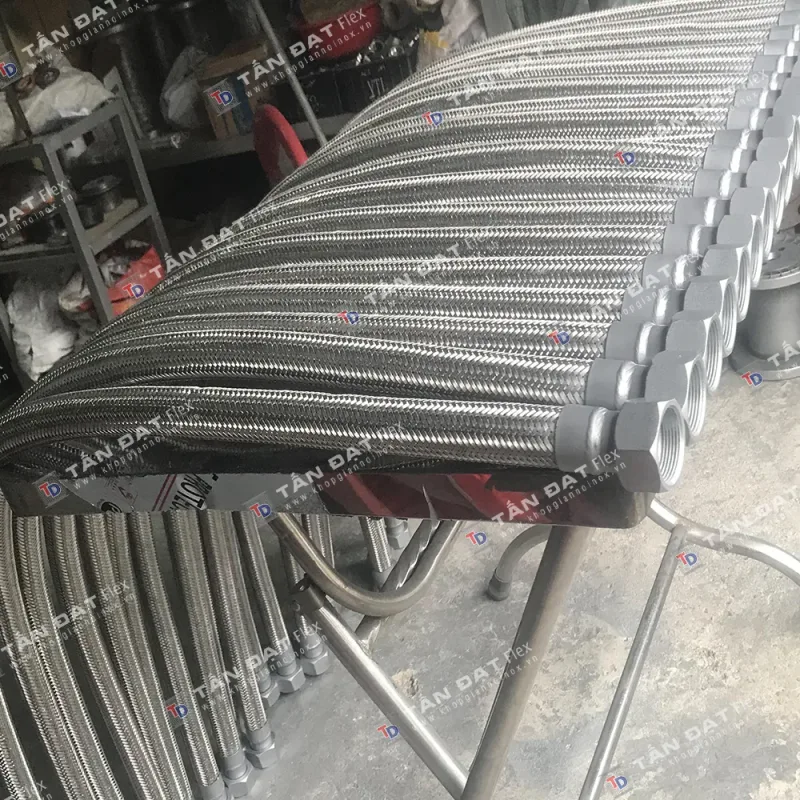
Heat-resistant stainless steel braided hose: construction and uses
Learn in detail about high-temperature braided stainless steel flexible hoses provided by Tan Dat: constructed from…